Published on 11 Nov 2022 – 3 min read read نُشر بتاريخ 11 Nov 2022 – مدة القراءة: 3 دقائق.
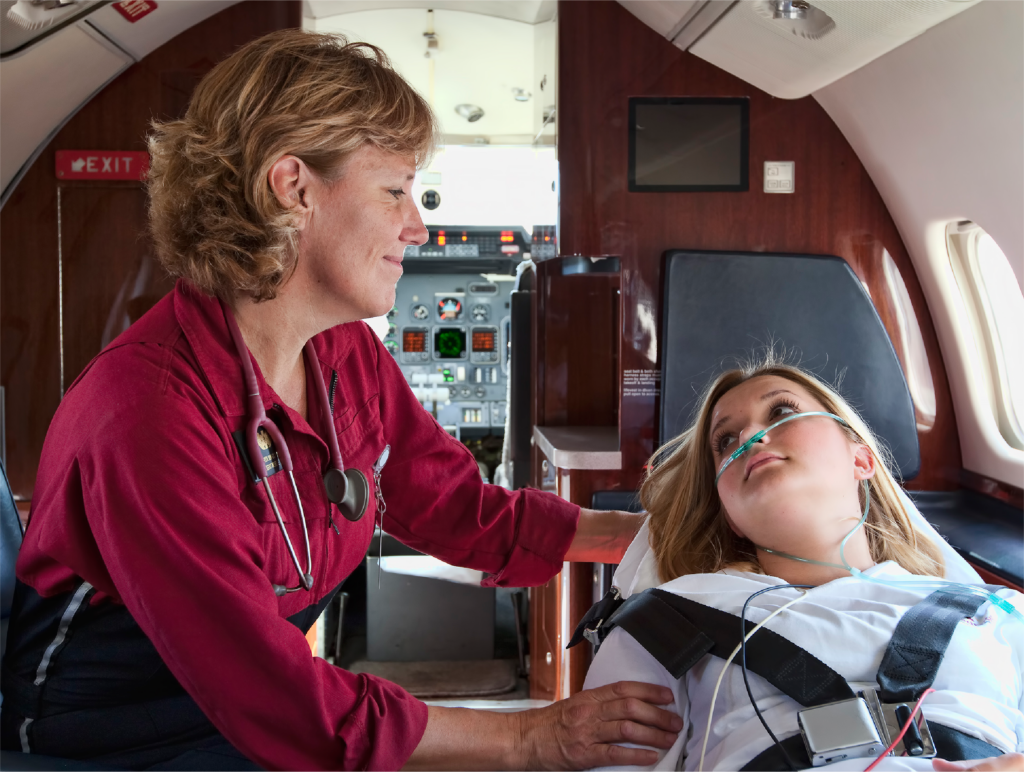
Not all cases of air transfer are about managing patients on multiple life support or critical care. However, other underlying non-life-threatening conditions may also require high levels of attention and dedicated care during aeromedical transfer, for example, patients with musculoskeletal involvement.
Musculoskeletal issues can arise from different causes such as fractures and dislocations due to trauma/falls etc. It can also be spinal and vertebral issues, traumatic and non-traumatic. Also, there are cases with congenital malformations, which require specialized care. These cases may be operated upon, or might still be waiting to be operated on after transfer.
Challenges of Immobilisation Inside Aircraft
In most cases, specialized care is needed: special splints and traction devices can be used for immobilization, while pain has to be managed with oral or IV analgesics as per the patient's tolerance levels and clinical status. Tractions can be set up inside an aircraft too, but need to be planned properly.
Not all types of aircraft can give additional space at the leg end to accommodate the traction system. The type of aircraft, the seating arrangement of the stretcher, and the space at the leg end, etc need to be taken into consideration before taking a patient with traction onboard. The metal weight usually is replaced by water, and sometimes with sand. Proper care has to be taken to stabilize the traction kit and the weight during take-off, landing, and turbulence.
Splints can also be tricky at times. For eg, the availability of Thomas splints can not be assured at times, when the case has to be moved early. But with the commonly available resources, a Thomas splint can be made on the scene. Using crutches with soft rolls, secure belts, etc, a long limb can be splinted without much hassle.
Special Care for Vertebra
Specialized mats with a soft bed, immobilizers, etc can be used in addition to the collars and braces for the spine. There are patients with congenital anomalies of the spine and extremities, especially child patients, who might need specialized braces for support. This has to be arranged before the transfer since alternatives or replacements may not be possible later due to size incompatibility.
Even with all the preparations for immobilization and minimizing movements, still, some patients will have exaggerated pain since air transfer will require moving the patient in more than a few instances. Careful and monitored use of analog sedatives is needed in such situations, and the same has to be outweighed by the clinical risks associated.
Like any clinically unstable cases for transfer, the air-medical transfer of patients with musculoskeletal issues, thus, requires specialized attention and care, including meticulous preparation for scientifically sound execution. This is a Bluedot promise: to ensure the journey is hassle-free as possible for the patient.
Wishing you Hope & Positivity,
Team Bluedot
لا تقتصر جميع حالات النقل الجوي على إدارة المرضى الخاضعين لوسائل متعددة لدعم الحياة أو الرعاية الحرجة. ومع ذلك، فإن الحالات الأخرى الكامنة وغير المهددة للحياة قد تتطلب أيضاً مستويات عالية من الانتباه والرعاية المخصصة أثناء النقل الطبي الجوي، ومنها على سبيل المثال المرضى الذين يعانون من إصابات في الجهاز العضلي الهيكلي.
ويمكن أن تنشأ مشاكل الجهاز العضلي الهيكلي من أسباب مختلفة مثل الكسور والخلع الناتج عن الصدمات أو السقوط وغيرها. كما يمكن أن تكون مشاكل في العمود الفقري والفقرات، سواء كانت ناتجة عن إصابات حركية أو غير إصابية. بالإضافة إلى ذلك، هناك حالات تعاني من تشوهات خلقية تتطلب رعاية متخصصة، وقد تكون هذه الحالات قد خضعت لعمليات جراحية بالفعل، أو ربما لا تزال تنتظر إجراء العمليات بعد النقل.
تحديات تثبيت الحركة داخل الطائرة
في معظم الحالات، تبرز الحاجة إلى رعاية متخصصة؛ حيث يمكن استخدام جبائر خاصة وأجهزة شد لتثبيت الحركة، بينما يتعين إدارة الألم باستخدام مسكنات الألم الفموية أو الوريدية وفقاً لمستويات تحمل المريض وحالته السريرية. ويمكن إعداد أنظمة الشد والأثقال داخل الطائرة أيضاً، لكن هذا الأمر يتطلب تخطيطاً دقيقاً ومسبقاً.
ولا يمكن لجميع أنواع الطائرات توفير مساحة إضافية عند طرف الساقين لاستيعاب نظام الشد. لذلك، يجب أخذ نوع الطائرة، والترتيب الهيكلي لمقاعد النقالة الطبية، والمساحة المتوفرة عند طرف الساقين بعين الاعتبار قبل استقبال مريض يخضع لنظام الشد على متن الطائرة. وعادة ما يتم استبدال الأوزان المعدنية بالماء، وأحياناً بالرمل، مع ضرورة توخي العناية الفائقة لتثبيت طقم الشد والوزن أثناء الإقلاع، والهبوط، وأثناء الاضطرابات الجوية.
ويمكن للجبائر أيضاً أن تشكل تحدياً في بعض الأحيان؛ فعلى سبيل المثال، لا يمكن ضمان توفر جبائر "توماس" في بعض الأوقات عندما يتعين نقل الحالة بشكل عاجل. ولكن باستخدام الموارد المتاحة عادة، يمكن صنع جبيرة "توماس" في الموقع؛ فمن خلال استخدام العكازات مع لفائف قطنية ناعمة وأحزمة أمان محكمة، يمكن تجبير الأطراف الطويلة دون الكثير من العناء.
رعاية خاصة للعمود الفقري
يمكن استخدام مراتب متخصصة مزودة بسرير ناعم ومثبتات حركة، بالإضافة إلى طوق العنق ودعامات العمود الفقري. وهناك مرضى يعانون من تشوهات خلقية في العمود الفقري والأطراف، وخاصة المرضى من الأطفال، والذين قد يحتاجون إلى دعامات مشدودة ومتخصصة للحصول على الدعم الفعال. ويجب ترتيب ذلك قبل عملية النقل لأن البدائل أو التبديلات قد لا تكون ممكنة لاحقاً بسبب عدم توافق الأحجام والمقاسات.
ورغم كل الاستعدادات المتخذة لتثبيت الحركة وتقليل الاهتزازات، إلا أن بعض المرضى قد يعانون من آلام متزايدة ومضاعفة؛ نظراً لأن النقل الجوي يتطلب تحريك المريض في أكثر من مناسبة ومرحلة. ويتطلب هذا الوضع استخداماً حذراً ومراقباً للمسكنات والمهدئات المماثلة، ويجب موازنة ذلك بدقة مقابل المخاطر السريرية المرتبطة بها.
ومثلها كمثل أي حالات غير مستقرة سريرياً وتتطلب النقل، فإن النقل الطبي الجوي للمرضى الذين يعانون من مشاكل الجهاز العضلي الهيكلي يتطلب اهتماماً ورعاية متخصصة، بما في ذلك التحضير الدقيق للتنفيذ العلمي السليم. وهذا هو وعد بلودوت دائماً: ضمان أن تكون الرحلة خالية من المتاعب قدر الإمكان للمريض.
مع تمنياتنا لكم بالأمل والإيجابية،
فريق بلودوت