Published on 31 May 2023 – 3 min read read نُشر بتاريخ 31 May 2023 – مدة القراءة: 3 دقائق.
There are many clinical scenarios in which patients need to be administered nutrition through tubes, either through the nose/mouth or directly to the stomach/intestine with surgically created openings (gastrostomy/jejunostomy). They may need it continuously, or sometimes, intermittently. Feeding is usually provided in a controlled manner in an in-hospital setting. Even though it's logistically and clinically challenging to provide the same in a pre-hospital setting and during air travel, it can be delivered with the proper equipment and adjuncts.
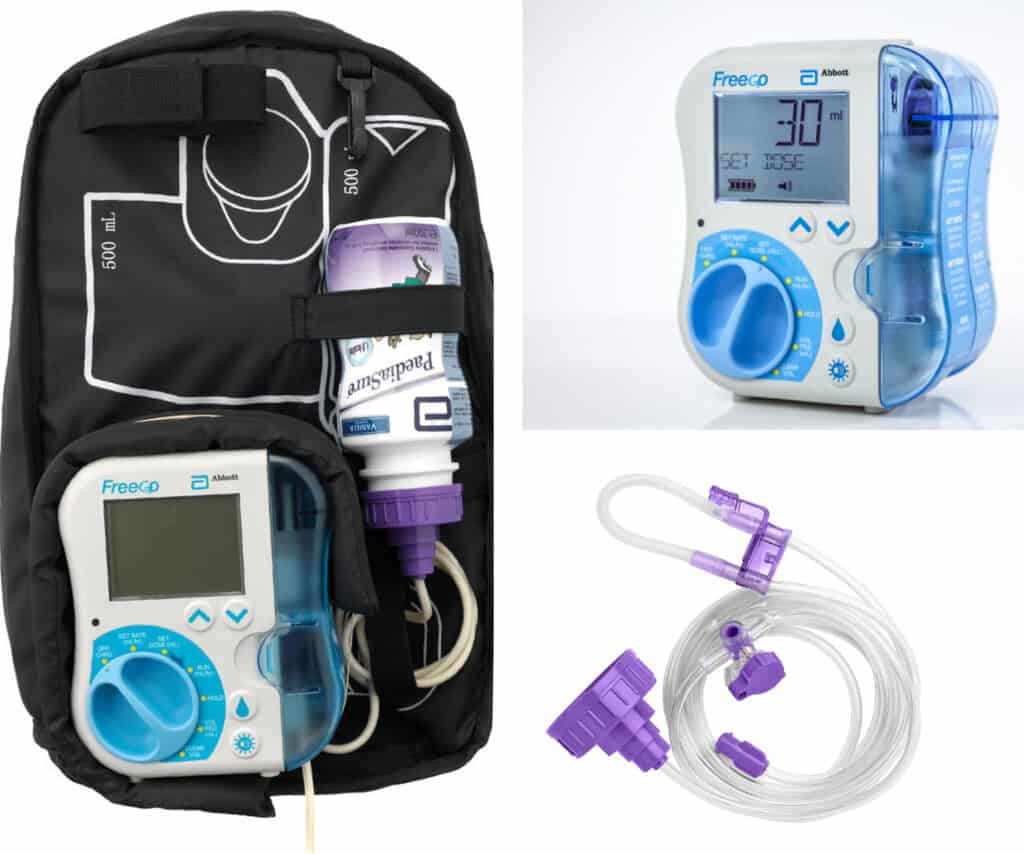
The first and most important equipment is an industry-standard Feeding Pump. This has to be compact, lightweight, and battery-operated. It is important to ensure that the giving set/feeding set is compatible with the tube which is already on the patient. A sufficient number of feeding sets must be transported for the duration of the trip, and additional feeding pumps may also be required as a backup, depending on the length of the journey.
Administering the feed via the feeding pump in the pre-hospital setting and inside a commercial aircraft or an air ambulance becomes challenging because of the space constraints for setting up the system, the non-availability of IV stands, etc. Portable IV stands can be used to overcome this challenge.
During air travel, compact foldable IV poles can be used to secure the feeding bag and the feeding pump in an orderly manner and may be moved around as well, albeit with caution. Additionally, a portable backpack can also be considered in case the feed has to be administered while on the move.
Inside a private aircraft or air ambulance, the system can be set up without much hassle. However, during commercial flight travel, different strategies have to be adopted depending on the patient and the cabin space available. For instance, in the case of a neonate with a feeding requirement, baby cots can be made available onboard, and an S-shaped hook can be used to hang the feeding bag from a neighboring seat. In a business class adult patient, we can use the portable IV pole to set up the system. On commercial flight stretchers, an IV pole is often available onboard, and if not, the portable one can be used. Even with the information stated above, the requirements of the patient have to be addressed as per need, and the same has to be delivered with care during the travel. As always, it can be achieved by meticulous planning and a thorough pre-transfer evaluation, through which a tailor-made plan can be laid down for that particular case. Adapting to the dynamic situation and providing the journeys of care is what matters at the end of the day.
هناك العديد من السيناريوهات السريرية التي يحتاج فيها المرضى إلى إعطائهم التغذية عن طريق الأنابيب، إما من خلال الأنف أو الفم، أو مباشرة إلى المعدة أو الأمعاء عبر فتحات يتم إنشاؤها جراحياً مثل تفميم المعدة أو تفميم الصائم. وقد يحتاج المرضى إلى هذه التغذية بشكل مستمر، أو في بعض الأحيان بشكل متقطع. وعادة ما يتم تقديم التغذية بطريقة محكومة ومنضبطة داخل بيئة المستشفى. وعلى الرغم من وجود تحديات لوجستية وسريرية لتقديم الخدمة نفسها في بيئة ما قبل المستشفى وأثناء السفر الجوي، إلا أنه يمكن توفيرها بكفاءة عند استخدام المعدات والملحقات المناسبة.
وتُعد أول وأهم هذه المعدات هي مضخة التغذية المتوافقة مع معايير القطاع الطبي. ويجب أن تكون هذه المضخة مدمجة، وخفيفة الوزن، وتعمل بالبطارية. ومن الضروري التأكد من أن مجموعة الإعطاء أو طقم التغذية متوافق تماماً مع الأنبوب المثبت بالفعل للمريض. كما يجب نقل عدد كافٍ من أطقم التغذية لتغطي مدة الرحلة بأكملها، وقد يتطلب الأمر أيضاً توفير مضخات تغذية إضافية كأجهزة احتياطية، اعتماداً على طول المسافة والوقت المستغرق في الرحلة.
ويصبح إعطاء التغذية عبر مضخة التغذية في بيئة ما قبل المستشفى وداخل طائرات الركاب التجارية أو طائرات الإسعاف الجوي أمراً محفوفاً بالتحديات بسبب قيود المساحة المتاحة لإعداد النظام، وعدم توفر حامل المحاليل الوريدية التقليدي، وغير ذلك من العقبات. ويمكن استخدام حوامل المحاليل الوريدية المحمولة للتغلب على هذا التحدي بالذات.
وأثناء السفر الجوي، يمكن استخدام أعمدة المحاليل الوريدية المدمجة والقابلة للطي لتثبيت كيس التغذية ومضخة التغذية بطريقة منظمة، كما يمكن تحريكها أيضاً، وإن كان ذلك يتطلب حذراً شديداً. بالإضافة إلى ذلك، يمكن أيضاً مراعاة استخدام حقيبة ظهر محمولة في حال توجب إعطاء التغذية للمريض أثناء الحركة والتنقل.
وداخل الطائرات الخاصة أو طائرات الإسعاف الجوي، يمكن إعداد هذا النظام دون الكثير من المتاعب. ومع ذلك، أثناء السفر على متن الرحلات الجوية التجارية، يتعين اعتماد استراتيجيات مختلفة بناءً على حالة المريض ومساحة المقصورة المتاحة. فعلى سبيل المثال، في حالة وجود طفل حديث الولادة يحتاج إلى تغذية أنبوبية، يمكن توفير أسرة الأطفال الرضع على متن الطائرة، واستخدام خطاف على شكل حرف إس لتعليق كيس التغذية من المقعد المجاور. أما بالنسبة للمريض البالغ في درجة رجال الأعمال، فيمكننا استخدام عمود المحاليل الوريدية المحمول لإعداد النظام. وعلى نقالات الرحلات التجارية، غالباً ما يكون عمود المحاليل الوريدية متوفراً على متن الطائرة، وإذا لم يكن كذلك، يمكن استخدام العمود المحمول.
وحتى مع وجود المعلومات المذكورة أعلاه، يجب تلبية احتياجات المريض بدقة وفقاً لمتطلبات حالته، وتقديم الرعاية نفسها بحرص شديد أثناء السفر. وكما هو الحال دائماً، يمكن تحقيق ذلك من خلال التخطيط الدقيق والتقييم الشامل للحالة قبل عملية النقل، واللذين يمكن من خلالهما وضع خطة مخصصة ومصممة خصيصاً لتلك الحالة المعينة. فالقدرة على التكيف مع المواقف الديناميكية المتغيرة وتقديم رحلات رعاية آمنة هي ما يهم في نهاية المطاف.